| |
Golfer's Elbow
Description
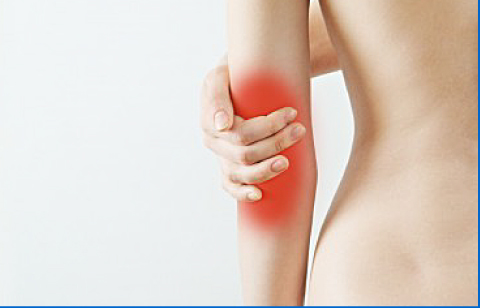
Golfer’s elbow, also known as medial epicondylitis, is similar to tennis elbow but is less common. Although it was originally described in golfers, it can also occur in people who do not play golf at all. It usually affects the inner side of the elbow.
The usual symptoms are pain and tenderness on the inner (medial) side of the elbow, particularly over the bony prominence called the medial epicondyle. The pain is often aggravated by activities such as grasping, lifting, opening a jar, bending the wrist or rotating the forearm, and it may sometimes spread down the forearm. Some patients may also notice a degree of weakness in grip.
In some cases, golfer’s elbow may be associated with ulnar neuropathy (ulnar nerve compression). This can cause tingling, numbness or altered sensation along the inner side of the forearm and hand, extending to the ring and little fingers.
Golfer’s elbow is usually caused by overuse of the flexor-pronator muscles and their tendon attachment on the inner side of the elbow. This commonly follows repetitive or forceful activities involving wrist flexion, forearm rotation and gripping. In many cases, the condition is related to degeneration or wear and tear within the tendon rather than inflammation alone. Back...
Diagnosis
The diagnosis is usually made from the history and clinical examination. The pain is typically reproduced by pressure over the medial epicondyle and by resisted wrist flexion or forearm pronation. In most cases, further investigations are not essential, although X-rays, ultrasound or MRI scans may occasionally be requested to exclude other causes of medial elbow pain or to assess associated conditions.
Treatment
Treatment usually starts with non-operative measures. These may include a period of rest or activity modification, painkillers or anti-inflammatory medication, physiotherapy, stretching and strengthening exercises, and the use of a brace or splint to reduce strain on the tendon. Topical treatments such as heat, cold application or ultrasound therapy may also be helpful. Most patients improve with these measures, although recovery may sometimes take several months.
In selected cases, an injection may be considered and can prove successful for many patients. When symptoms remain severe despite a full course of conservative treatment, operative treatment may be considered. This is usually directed at releasing and excising the diseased part of the tendon. If there is an associated ulnar neuropathy, an additional procedure to release the nerve may also be recommended during the same operation.
The operation can usually be performed as a Day-Surgery case. Further detailed information and the appropriate treatment option will be provided to you by Mr. Khalid Ayoub during the consultation. Back...
|
|