| |
|
|
| |
Arthroscopic (Keyhole) Surgery
What is Arthroscopic Operation?
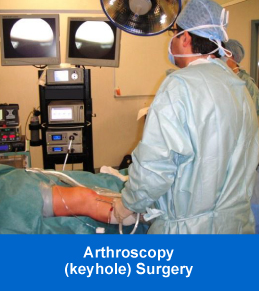
Arthroscopic surgery, also known as keyhole surgery, is a modern minimally invasive technique used to examine, diagnose and treat problems inside a joint.
It is performed through very small incisions in the skin, usually about the size of a buttonhole. A tiny camera and fine instruments are used to allow the surgeon to see clearly inside the joint and carry out treatment without the need for a large open incision.
Advantages
Compared with traditional open surgery, arthroscopic surgery offers a number of important benefits:
• Less pain after the operation
• It is often performed as a Day-Surgery procedure, so you may not need to stay overnight
in hospital
• Lower risk of infection and some other complications
• Smaller wounds and quicker healing
• Faster return to normal daily activities, work and sport
• Better cosmetic appearance, with much smaller scars
|
|
|
| |
|
|
| |
How it is performed?
Arthroscopic surgery has become possible because of major advances in camera, lighting and fibreoptic technology.
The surgeon makes a very small incision in the skin, usually less than 10mm, and inserts an arthroscope. This is a slim instrument, about the size of a pen, containing a light source and a high-definition camera. The camera sends clear images from inside the joint onto a monitor, allowing the surgeon to inspect the joint in detail and confirm the diagnosis.
If treatment is needed, one or more further small incisions are made so that fine surgical instruments can be introduced. The whole procedure is performed while the surgeon watches the images on the screen.
|
|
|
|
| |
What do you expect after the operation?
You will wake up in the recovery area, where the nursing staff will monitor you closely and make sure you are comfortable.
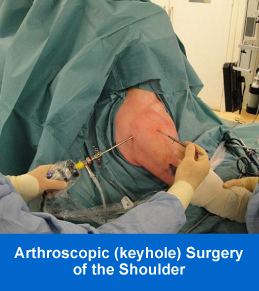
Arthroscopic Surgery of the Shoulder
In most cases of arthroscopic shoulder surgery:
• Your shoulder, arm and sometimes your hand may feel heavy and numb, but usually comfortable. This is often due to a special anaesthetic nerve block called an Interscalene Block, which may last for 12 to 24 hours after the operation
• Your shoulder may appear swollen immediately after surgery. This is normal and is caused by the fluid used during the procedure. The swelling usually settles gradually over the next few hours
• You will have small adhesive dressings over the wounds, together with a larger absorbent dressing. A small amount of fluid leakage may occur for 24 to 48 hours
• A sling may already have been applied in theatre, or it will be fitted before you go home, depending on the type of surgery performed
|
|
|
|
|
| |
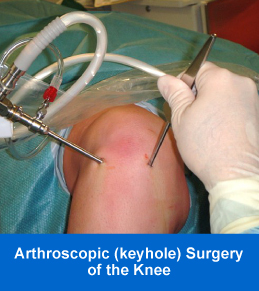
Arthroscopic Surgery of the Knee
In most cases of arthroscopic knee surgery:
• You will usually wake up with a bandage around your knee
• You will have small adhesive dressings covering the keyhole wounds. A small amount of fluid leakage may occur and can continue for 24 to 48 hours
• Local anaesthetic is often injected into the knee during the procedure to help control pain after the operation
In all cases, the nursing staff will monitor your recovery carefully, including your blood pressure, pulse, temperature and the condition of the operated limb. Some discomfort is expected, and pain relief will be provided as needed. You will usually also be given pain medication to take home.
Light refreshments are normally offered after the procedure. Depending on the type of operation, you may also be seen by a physiotherapist before discharge.
Most patients are able to go home later the same day, provided they are comfortable and medically fit. Occasionally, an overnight stay may be advised for medical reasons.
Before you leave hospital, you will be given full instructions on how to care for yourself and the operated limb at home. Shortly after the operation, Mr. Ayoub will also speak to you about the findings, the treatment carried out and the expected recovery plan. |
|
|
| |
|
|