| |
Trigger Finger / Thumb
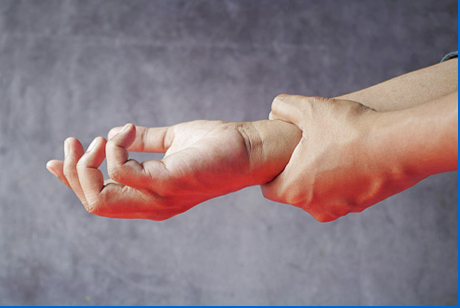
Trigger finger is a common condition affecting the hand, in which a finger or thumb catches, clicks, or locks as it bends and straightens. It happens when the flexor tendon and its sheath at the base of the finger become irritated or thickened, so the tendon no longer glides smoothly. In many people there is no single clear cause, although repetitive gripping, diabetes, rheumatoid arthritis, and increasing age can all make it more likely. It may affect one finger or thumb, several digits, or sometimes both hands.
Typical symptoms include pain and tenderness in the palm near the base of the affected finger, a clicking or snapping sensation, morning stiffness, and sometimes a small lump or nodule. As the condition progresses, the finger may begin to catch more often or lock in a bent position, sometimes needing the other hand to straighten it. This can interfere with everyday hand function such as gripping, writing, typing, buttoning clothes, holding tools, or turning a key.
Diagnosis
Diagnosis is mainly clinical. In most cases, trigger finger can be identified from the history and a careful examination of the hand, including checking for tenderness, smoothness of movement, clicking, and locking. Special tests are not usually required, but an ultrasound scan or an X-ray may occasionally be requested if the diagnosis is unclear, to look for associated tendon changes, to guide treatment, or to help rule out other problems such as arthritis.
Treatment
Treatment of trigger finger includes conservative treatment, steroid injection, and surgical release.
Conservative treatment may include activity modification, simple pain relief, anti-inflammatory medication where appropriate, splinting, and gentle finger exercises.
A steroid injection means placing medication around the tendon sheath at the base of the affected finger or thumb to reduce inflammation and help the tendon move more freely. This treatment can be effective in many cases, with a success rate of around 70%.
Surgical treatment involves an open release of the trigger finger. This is usually performed as a minor procedure under local anaesthesia through a small incision in the palm. It is considered the most successful treatment option and has a high success rate around 95%. Recovery is usually straightforward, although the hand may need a couple of weeks before returning comfortably to normal activities.
Mr. Ayoub will provide you with further details and recommend the most appropriate treatment option for your individual case. Back...
|
|